

The Eclipse
The astronomical event of the century
What happens, and where
The eclipse begins as a partial event across large parts of the Northern Hemisphere, including Europe, North Africa and the Middle East. Hundreds of millions of people will see a bite taken out of the Sun.
But the path of totality, the band where the Sun disappears entirely, crosses only a narrow strip. In Spain that strip covers almost the whole province of Cádiz, part of Málaga, the southernmost areas of Granada and Almería, and the cities of Ceuta and Melilla. It sweeps from west to east across the Strait of Gibraltar.
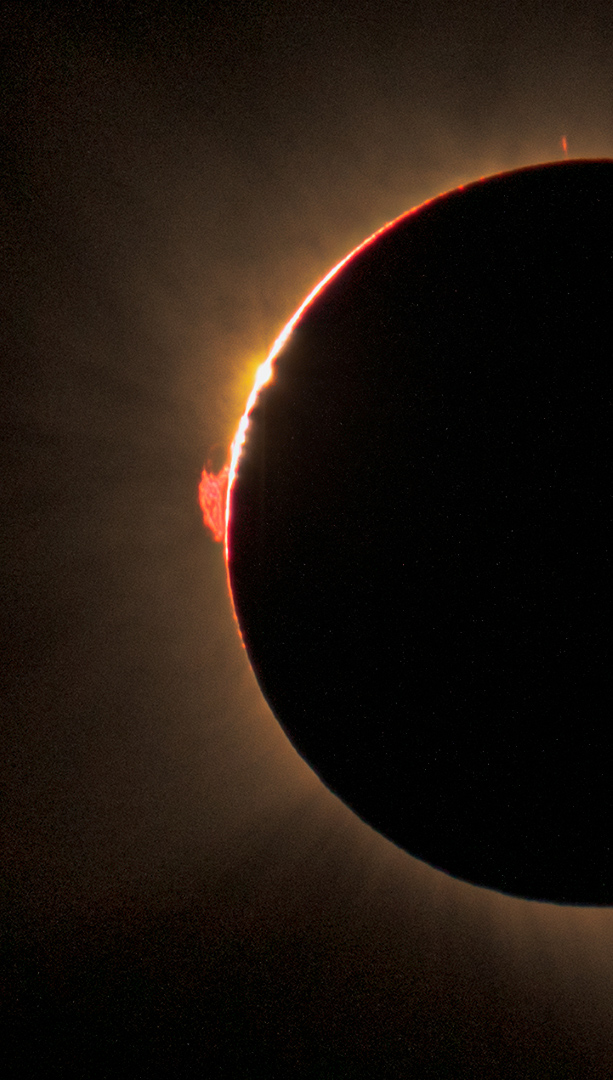
The difference between the two is not a matter of degree. A 99% partial eclipse is an interesting afternoon. Totality is a different phenomenon altogether, and it is the only time you can look at the solar corona, the Sun’s faint outer atmosphere, with your own eyes.
Everything about this expedition is built around putting you inside that band, close to its centre line, with your equipment ready.
Why the morning matters
Most eclipses force a compromise. The Sun sits low, you fight haze and obstructions, and you shoot into whatever the horizon gives you.
Not this one. Totality happens at around 10:47 in the morning, with the Sun roughly 38 degrees above the horizon. That means clean air, an unobstructed sky, comfortable observing, and the freedom to compose properly rather than working around a treeline.
It also means the whole event, from first contact to last, unfolds across the middle of the morning rather than racing the sunset. You get time.
